
ENVIRONMENTS / ACOUSTIC & BLACKOUT CURTAINS
Every space has
a different brief.
From the first take to the last encore. Explore 15 environments where considered curtain design can make sound, light and space work together.
Find your environmentFabric choices. Technical considerations.
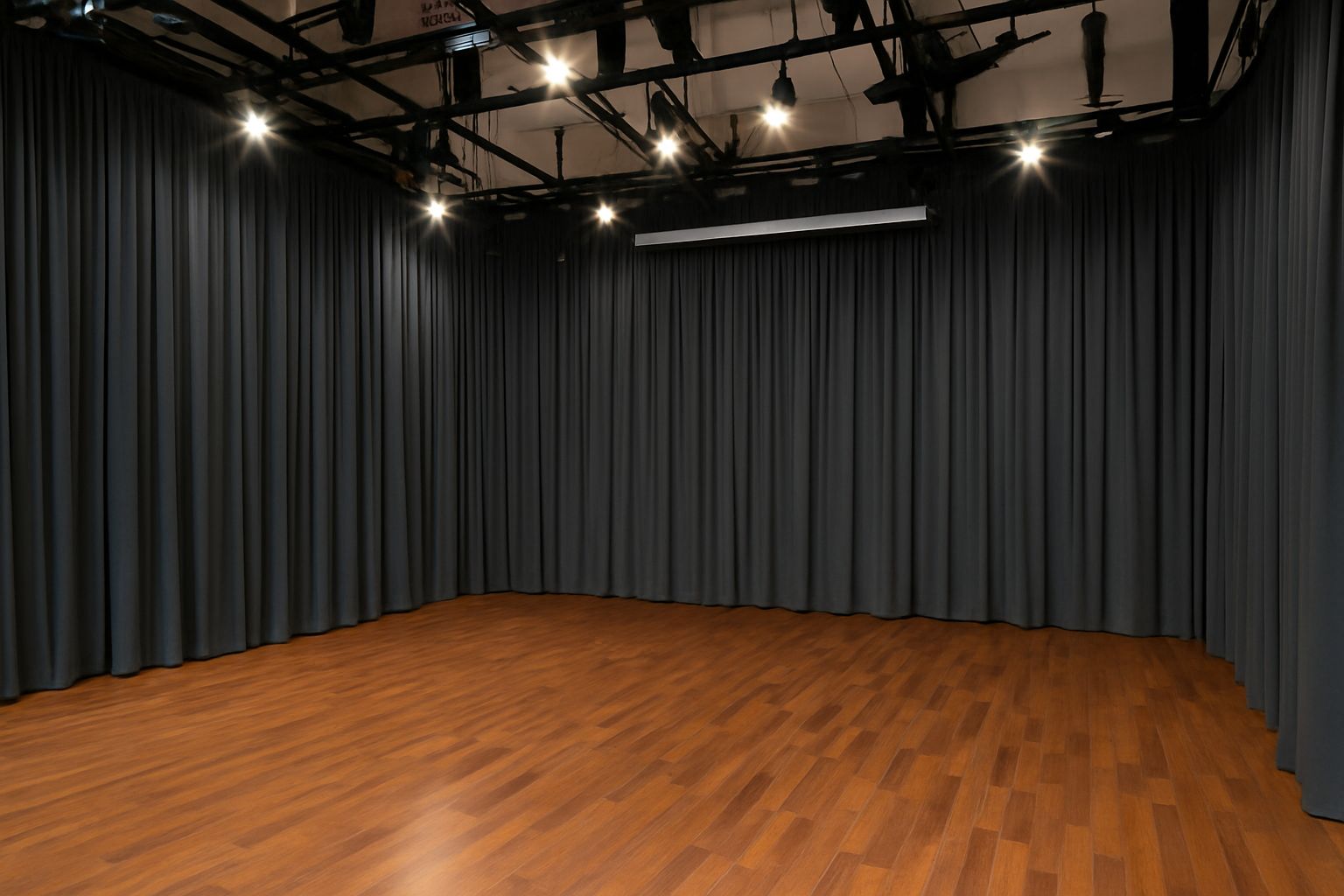
Manage reflections.
Absorption for the sound within a room.
Control the light.
Fabric and edge details designed together.
Adapt the space.
Retractable treatment and visual boundaries.
FIND YOUR APPLICATION
Start with what
the room needs.
Each guide connects everyday challenges with a practical curtain brief, fabric starting points and the evidence to review.
15 environments
Studios & production
Recording studios
A recording space needs a deliberate balance of absorption and liveliness. Retractable acoustic curtains let you change the exposed surface area around a performance or microphone position.
Studios & production
Podcast & broadcast rooms
Podcast and broadcast rooms often combine hard desks, glazing, cameras and several microphones. Acoustic curtains can form a flexible absorptive backdrop around the conversation area.
Studios & production
Film & TV studios
Film and television spaces need repeatable lighting, clear working routes and backgrounds that suit the shot. Drapery can provide window light control, perimeter masking and selected acoustic treatment.
Studios & production
Photography studios
Photography studios benefit from the ability to switch between daylight and controlled lighting. Made-to-measure curtains can cover glazed areas, screen storage and change the visible background.
Culture & community
Cinemas & screening rooms
Home cinemas, preview rooms and small screening venues need control over ambient light and reflected sound. Curtains can treat windows and selected wall areas while allowing the room to return to everyday use.
Culture & community
Theatres & performance spaces
Theatres and black-box spaces use drapery to define what an audience sees and to adapt the room to different performances. Masking, acoustic treatment and light control should each have a clear role in the specification.
Education & rehearsal
Schools & classrooms
Classrooms, school halls and teaching spaces often combine hard finishes, large windows and several activities. Curtains can add targeted absorption and make light levels more manageable for displays and presentations.
Education & rehearsal
Universities & lecture theatres
University teaching rooms host lectures, screenings, recorded presentations and hybrid sessions. Curtain systems can help adapt light and selected reflective surfaces to the activity taking place.
Education & rehearsal
Music & rehearsal rooms
Practice rooms, rehearsal studios and music departments need conditions that suit the musicians using them. Curtains can provide an adjustable area of absorption without permanently covering every wall.
Workplaces
Offices & meeting rooms
Glazed meeting rooms and flexible workspaces often need softer surfaces and control over daylight. Curtains can add targeted absorption, create visual separation and improve camera backgrounds for meetings.
Hospitality
Restaurants & bars
Dining rooms and bars often combine glass, hard floors and lively conversation. Suitable curtains can introduce absorptive surface area and give the room a flexible visual character across different services.
Hospitality
Hotels & guest rooms
Guest rooms need dependable light control and easy daily operation. Hotel meeting and event spaces may also benefit from adjustable absorption and presentation blackout, with a different specification for each room type.
Culture & community
Community & event halls
Community halls host meetings, parties, classes, performances and screenings. Retractable curtain systems can provide different combinations of visual masking, light control and exposed absorption for these uses.
Culture & community
Places of worship
Places of worship may need to balance spoken services, music, community events and the character of the building. Retractable acoustic curtains offer one way to vary treatment while keeping the room’s different uses in mind.
Culture & community
Museums & galleries
Museums, galleries and temporary exhibitions use curtains to shape visitor routes, screen installations and manage light around moving-image work. Acoustic treatment may also help selected audiovisual areas when planned with the exhibition design.
FROM APPLICATION TO EVIDENCE
Specify the result.
Then choose the fabric.
These are application guides, not completed project case studies. Fabric choices are starting points for a project-specific specification. Acoustic absorption data describes the tested assembly; it does not promise sound isolation between rooms.
Explore testing & results ↗Three questions to bring us
- What should change: room reflections, light levels or visual screening?
- Where can curtains run, and where will they stack when open?
- Which measurements, drawings or performance requirements can you share?
FROM SPECIFICATION TO INSTALLATION
Let’s make your
space work better.
Share your dimensions, your application and what you need to achieve. We’ll help you specify the fabric and finish.
Discuss your project